Getting stranded on the side of the road with a disabled vehicle is a stressful experience that nearly every driver faces at some point. Whether your car refuses to start in your driveway, suffers a sudden breakdown on a busy highway, or slips off an icy curve into a muddy ditch, knowing exactly who to contact can mean the difference between a quick resolution and hours of unsafe waiting. Different vehicle mishaps demand specialized solutions, ranging from simple battery jump-starts and tire swaps to heavy-duty winching and comprehensive post-collision repairs. Understanding the full landscape of vehicle recovery and automotive service providers ensures that you make smart, cost-effective decisions when trouble strikes.
Assessing Your Immediate Situation
Prioritizing Personal Safety and Location Identification
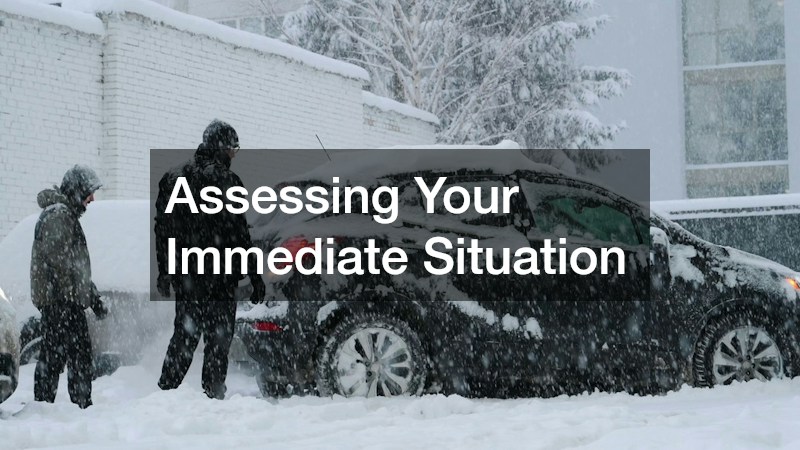
Before dialing any telephone number for help, your primary objective must be to secure your immediate personal safety and establish your exact coordinates. If your vehicle breaks down while driving, maneuver it as far off the active roadway as possible, preferably onto a wide shoulder or into a nearby parking lot. Turn on your hazard lights immediately to alert oncoming traffic. If you are stuck in a dangerous traffic lane or near a blind curve, stay inside your vehicle with your seatbelt fastened, provided it is safe to do so. Identify your surroundings by looking for major cross streets, mile markers, notable landmarks, or by using the location features on your smartphone. Clearly communicating your exact spot helps service operators dispatch the correct emergency vehicles promptly.
Evaluating the Underlying Cause of Your Vehicle Distresses
Take a moment to carefully evaluate what has caused your car to become immovable. Is the issue a non-emergency physical obstacle like deep mud, sand, or snow? Or is it a mechanical failure, such as a dead battery, an overheated engine, or a flat tire? Perhaps your vehicle was involved in a minor collision that rendered it unsafe to drive due to damaged body panels or compromised steering components. Identifying whether you need simple pulling power, mechanical troubleshooting, or transport to a service facility allows you to contact the correct specialists on your first attempt, saving both time and money.
Essential Contact Resources for Common Vehicle Issues
Utilizing Subscribed Emergency Roadway Services
For everyday driving mishaps, reaching out to your pre-arranged roadside assistance provider is usually the fastest and most economical option. These programs, often offered through auto clubs, insurance policies, or new car warranties, cover fundamental roadside emergencies such as jump-starting a dead battery, delivering fuel, changing a flat tire with your spare, or unlocking your vehicle. Dispatchers evaluate your specific situation and send an affiliated service provider directly to your location. Utilizing these membership services often saves you from paying out-of-pocket fees at the time of the incident, as basic towing up to a specified mileage limit is typically included in your coverage plan.
Contacting Independent Pulling and Recovery Operators
When you find yourself stranded without a membership program, or if your vehicle requires immediate transport to a local repair shop, calling local towing companies is the most direct path forward. Independent towing specialists operate around the clock to assist stranded motorists with quick transport and on-demand assistance. Unlike national call centers, local operators possess intimate knowledge of regional roads, traffic patterns, and weather conditions, allowing them to arrive faster. They can haul your vehicle to your preferred mechanic, your house, or a local service hub while providing immediate relief from roadside stress.
Securing Specialized Extrication for Off-Road Traps
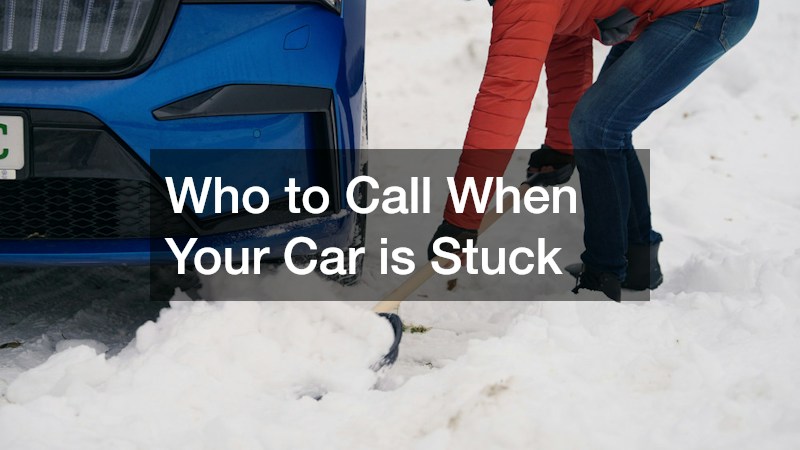
If your vehicle has slid off the pavement into a steep ditch, deep mud, soft sand, or heavy snowpack, standard towing equipment might not be sufficient to free it safely. In these complex scenarios, requesting winch out services becomes absolutely necessary to extract your car without causing structural or cosmetic damage. Professional recovery teams utilize heavy-duty motorized cables, specialized rigging equipment, and precise anchoring techniques to pull trapped vehicles back onto stable ground. Attempting to force a stuck car out under its own power often leads to severe transmission damage or buried tires, making professional winching the safest choice.
Choosing the Correct Recovery Vehicle and Towing Technique
Understanding Standard Flatbed and Wheel-Lift Options
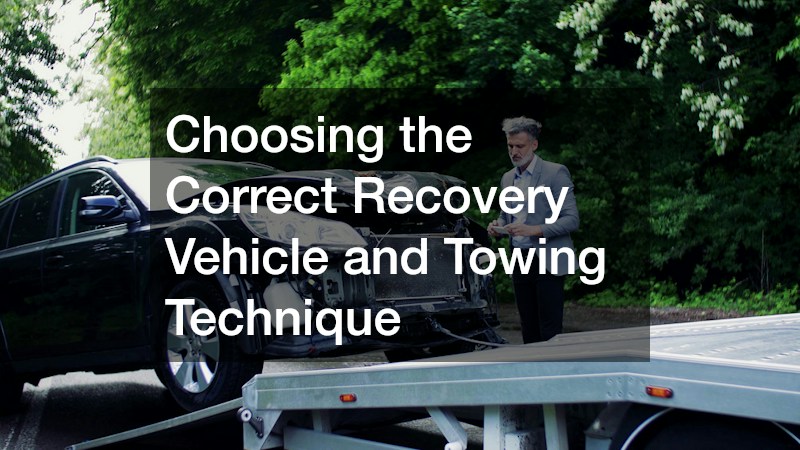
When standard towing is required, the type of tow vehicle dispatched to your location matters significantly based on your vehicle type. Wheel-lift tow trucks engage a car by its tires, lifting two wheels off the ground while the remaining two roll along the road. While effective for short distances, this method is not suitable for all vehicles. Flatbed tow trucks, on the other hand, feature a hydraulically tilting bed that lowers to the ground, allowing your entire car to be driven or pulled via a winch onto the platform. Flatbed transport minimizes wear and tear and completely eliminates the risk of drivetrain damage during transit.
Managing Transport for All-Wheel Drive and Low-Clearance Cars
If you drive an all-wheel drive vehicle, a four-wheel drive truck, or a low-clearance sports car, special care must be taken during transport. Subjecting an all-wheel drive vehicle to a flat tow where wheels remain on the road can cause massive internal damage to the differential and transmission components. In these cases, flatbed hauling or dolly towing is essential to keep all drivetrain wheels completely suspended. Always inform the dispatcher about your vehicle make, model, and drive system so they send equipment that prevents costly mechanical mishaps.
Arranging Transport for Commercial Vehicles and RVs
Standard light-duty tow trucks are designed for passenger sedans, crossovers, and light pickups. If you operate a large commercial van, a heavy-duty pickup truck, a recreational vehicle, or a semi-truck, you must contact a specialized heavy duty towing company equipped with commercial-grade recovery rigs. These massive tow vehicles possess high-capacity booms, advanced hydraulic winches, and amplified braking capabilities specifically designed to handle extreme weights. Attempting to move heavy commercial equipment with standard machinery poses severe safety risks and can lead to equipment failure.
Handling Severe Accidents and Structural Immobilization
Managing Emergency Road Clearing and Post-Accident Clearing
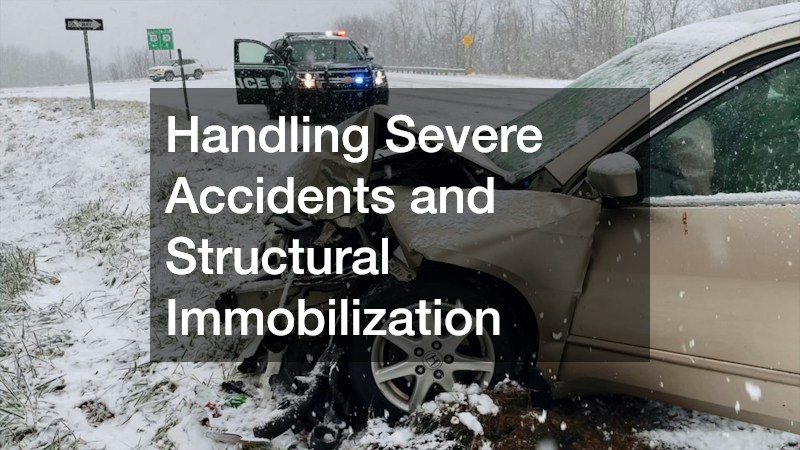
When a serious traffic collision occurs, local law enforcement or municipal authorities typically dispatch professional wrecker services to clear the accident scene quickly. These specialized recovery operators are equipped to clear heavy debris, upright overturned vehicles, and haul away severely damaged cars that can no longer roll on their own wheels. Emergency clearing operators focus on restoring traffic flow and securing the area safely, working in close coordination with police and first responders.
Selecting Proper Facilities for Collision Restoration
After an accident renders your vehicle non-drivable, you will need to direct the tow driver to haul your car to a certified local auto collision center for inspection and structural restoration. Choosing a reputable facility ensures that frame alignment, suspension damage, and broken body panels are comprehensively evaluated. Professional collision technicians work directly with your insurance adjuster to estimate repair costs, order original manufacturer parts, and systematically rebuild your vehicle to factory safety standards before returning it to the road.
Addressing Bodywork and Structural Shell Restoration
For vehicles undergoing major structural reconstruction after a crash, repair facilities utilize specialized tools to repair frame rails, quarter panels, and metal components. When preparing metal surfaces for fresh primer and paint, technicians frequently utilize an automotive sandblasting service to remove deep rust, old paint layers, and corrosion thoroughly. Stripping the metal down to a clean baseline guarantees that new body panels adhere correctly and prevents structural degradation down the line, restoring your vehicle both visually and structurally.
Repairing Drivetrain and Exterior Panels After an Impact
Vehicle collisions rarely damage just the outer sheet metal; the impact often damages essential suspension components, steering linkages, and stopping mechanisms. Once the bodywork is pulled back into shape, technicians must perform thorough auto body repairs to realign structural mounts and replace crushed crumple zones. Ensuring that outer panels fit seamlessly and bumper covers are structurally sound is vital not only for your car appearance but also for preserving its overall crashworthiness in future drives.
Resolving Mechanical Failures on the Roadside
Diagnosing Electrical System and Battery Failures
A vehicle that turns over slowly or makes a rapid clicking sound when you turn the key usually suffers from a dead battery or alternator failure. Roadside technicians can quickly test your battery voltage, clean corroded terminals, and apply a high-output jump pack to start your engine. If your alternator has failed, however, jumping the battery will only provide temporary power, and the vehicle will likely stall again once driven. In that scenario, professional transport to an auto repair shop is required to replace the charging system components.
Handling Overheating and Cooling System Breakdown
If your dashboard temperature gauge spikes into the red or you see steam billowing from under the hood, pull over immediately and switch off the ignition. Running an overheated engine can warp cylinder heads and crack the engine block within minutes. Common causes include leaking radiator hoses, broken serpentine belts, or failed water pumps. Never attempt to remove a hot radiator cap, as pressurized boiling coolant can cause severe burns. Wait for the engine to cool down completely before checking fluid levels, and call for transport if you notice visible leaks.
Resolving Severe Braking System Disruptions
A sudden loss of hydraulic pressure, a soft brake pedal, or violent grinding noises when slowing down indicates a dangerous failure in your stopping system. Continuing to drive with compromised stopping capabilities puts you and other motorists in extreme danger. If your vehicle cannot stop reliably, pull over safely using your emergency brake if necessary and call for a flatbed tow. Getting comprehensive auto brake repairs performed by certified mechanics ensures that worn pads, damaged rotors, or leaking brake lines are fully fixed before you get back behind the wheel.
Preparing for Roadside Incidents Before They Happen
Assembling a Comprehensive Vehicle Emergency Kit
Being prepared for unexpected breakdowns drastically reduces stress and improves safety while waiting for help. Keep an emergency response kit stored in your trunk at all times. Essential items include a heavy-duty flashlight with extra batteries, jumper cables or a portable lithium jump-starter pack, a tire pressure gauge, reflective warning triangles or flares, a basic tool set, a first-aid kit, and non-perishable snacks and water. In winter months, add a warm blanket, ice scraper, collapsible shovel, and a bag of sand or cat litter to aid tire traction on slippery surfaces.
Storing Essential Contact Numbers and Documentation
While modern smartphones allow us to search for services on demand, cellular coverage can be spotty or nonexistent in remote locations. Keep a physical card in your glovebox with essential phone numbers written down, including your insurance provider claims hotline, roadside membership numbers, and trusted local service shops. Additionally, ensure your vehicle registration, proof of insurance, and any warranty documentation are always current and easily accessible.
Conducting Routine Preventative Maintenance Checks
The most effective way to handle roadside emergencies is to prevent them entirely through consistent maintenance. Regularly check your tire pressure, including the spare tire, and inspect tread depth for uneven wear. Routinely monitor fluid levels, including engine oil, coolant, brake fluid, and power steering fluid. Have a trusted mechanic inspect your battery, belts, and hoses during every oil change. Addressing minor wear and tear proactively reduces the likelihood of experiencing an unexpected breakdown on the road.
Summary of Actionable Roadside Emergency Steps
When your vehicle suddenly becomes stuck or disabled, following a clear sequence of actions ensures your safety and speeds up recovery:
- Move your vehicle to a safe location off the roadway if possible, activate your hazard lights, and assess your surroundings for safety.
- Identify the specific nature of the problem, determining whether you need simple mechanical help, winching, or transport to a facility.
- Call the appropriate service provider based on your situation, communicating your precise location and vehicle details clearly.
- Stay inside your vehicle with your seatbelt fastened if you are parked near active traffic lanes.
- Keep your phone line clear so the arriving technician or dispatcher can contact you directly if needed.
Experiencing a vehicle breakdown or getting stuck in an unsafe spot is undeniably frustrating, but you never have to navigate the situation alone. By understanding which professional service to call for your specific circumstance—whether it is simple roadside extrication, specialized flatbed transport, or comprehensive post-collision restoration—you can resolve emergency situations safely and efficiently. Prioritize your personal safety first, keep essential emergency supplies in your vehicle, and maintain reliable contact information so that help is always within reach when you need it most.