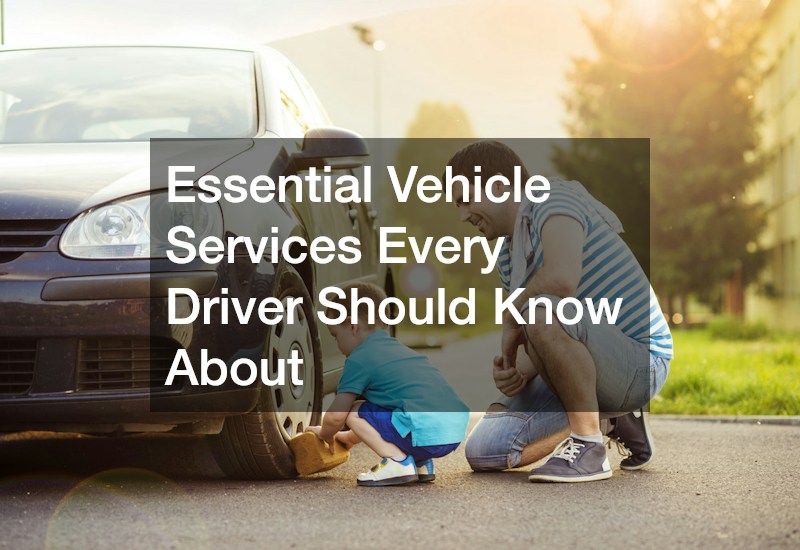
Owning a vehicle involves more than routine oil changes and tire rotations. Drivers may eventually face mechanical problems, collision damage, roadside breakdowns, specialty equipment needs, or the question of whether an aging vehicle is still worth repairing. Understanding the purpose of common automotive services can make those situations less stressful and help you make better decisions.
A useful approach is to think about vehicle care in categories. Safety-related problems come first, followed by mechanical reliability, accident damage, roadside recovery, specialty vehicle needs, and long-term ownership costs. Keeping good records and paying attention to changes in how a vehicle drives can help you recognize problems before they become more expensive.
You do not need to know how to perform every repair yourself. What matters is recognizing warning signs, explaining symptoms clearly, and knowing which type of professional is best suited to the problem. The following services are among the most important for drivers to understand.
Address Mechanical Problems Before They Affect Safety
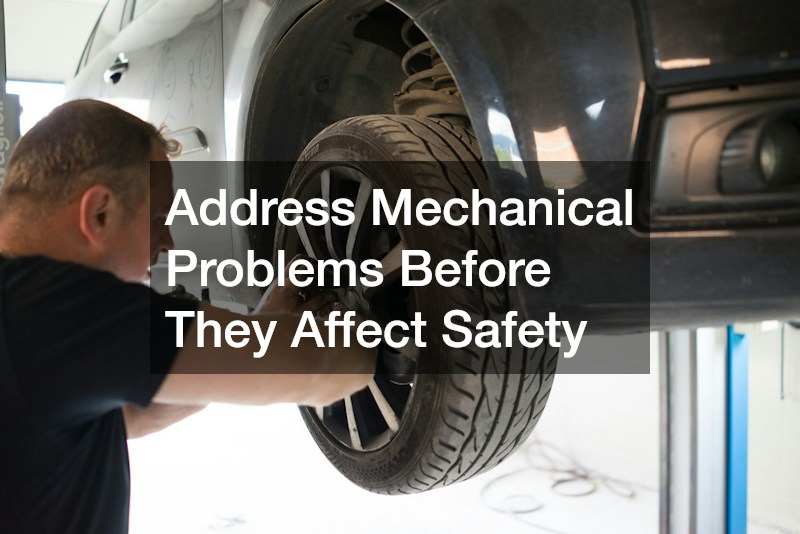
Changes in braking performance should never be ignored. A vehicle may still stop even when part of the braking system is wearing unevenly or beginning to fail, so subtle symptoms can be important.
Common warning signs include squealing or grinding, vibration through the pedal or steering wheel, pulling to one side, a soft pedal, a pedal that feels unusually firm, longer stopping distances, or warning lights on the dashboard. Professional brake repair services can inspect the system and determine whether the concern involves pads, rotors, calipers, brake fluid, hoses, or another component.
When discussing the problem, ask for specific findings rather than only a recommendation to replace parts. Useful questions include:
- How much friction material remains?
- Are the rotors still within specification?
- Is wear even from side to side?
- Are the front and rear brakes wearing normally?
- Is fluid condition affecting performance?
- Are any related parts beginning to fail?
These details help you understand whether the work is urgent, preventive, or something that can reasonably be monitored.
Vehicle make and model also matter. Modern cars increasingly rely on electronic systems, specialized diagnostic procedures, software, and manufacturer-specific service information. A mercedes mechanic, for example, may be appropriate when a Mercedes-Benz requires brand-specific diagnostics, repair procedures, or familiarity with its mechanical and electronic systems.
That does not mean every routine service requires a specialist. It means drivers should consider the complexity of the problem, the equipment needed to diagnose it, and the technician’s familiarity with the vehicle.
Keep records of major work, including mileage, diagnostic findings, replaced parts, fluids used, and warranty information. If the same warning light or vibration returns months later, that history can make the next diagnosis more efficient.
Most importantly, describe what the vehicle is doing rather than trying to diagnose it yourself. Tell the technician when the symptom occurs, whether it changes with speed, whether the engine is hot or cold, and whether anything was recently repaired. Clear observations often provide better diagnostic clues than guessing which part has failed.
Know What to Do After a Collision
Even a minor collision can affect more than the panel or bumper you can see. Behind exterior surfaces are reinforcement structures, mounting points, lighting components, sensors, and other parts that may be damaged even when the vehicle remains drivable.
When comparing local auto body shops, ask how they evaluate structural and hidden damage. A complete assessment may include bumper reinforcement, wheel alignment, suspension, frame or unibody measurements, sensors, lights, and panel mounting points.
Do not compare estimates based only on the total at the bottom. One shop may include operations that another leaves out. Review whether the estimate covers:
- Parts and labor
- Paint and refinishing materials
- Structural measurements
- Wheel alignment
- Sensor calibration
- Replacement clips and hardware
- Damage discovered after disassembly
Supplemental repairs are common when hidden damage becomes visible after exterior parts are removed. Ask how the shop communicates those changes and whether additional authorization is required.
Before accepting the vehicle after repairs, inspect panel gaps and paint consistency. Open and close the doors, hood, and trunk. Confirm that exterior lights work and no new dashboard warnings are present. During the first drive, pay attention to steering feel, vibration, and unusual noises.
Some drivers also rely on mobility equipment or other specialized accessories. A car lift may be used to transport a wheelchair, scooter, or another mobility device, depending on the vehicle and the user’s needs. If such equipment is installed, compatibility and capacity should be treated as safety issues.
Before installation, confirm:
- The vehicle can support the equipment.
- The lift is rated for the device being transported.
- Mounting points are appropriate.
- Electrical requirements can be met.
- Loading and unloading clearances are sufficient.
- The system does not interfere with visibility or other equipment.
If a vehicle with mobility equipment is involved in a collision, both the vehicle and the accessory should be evaluated. Damage to mounting points, wiring, or structural areas may not be obvious.
The same principle applies to any major repair: restoring appearance is only part of the job. Proper function, structural integrity, and safety systems should be addressed before the vehicle is considered fully repaired.
Prepare for Breakdowns Before They Happen
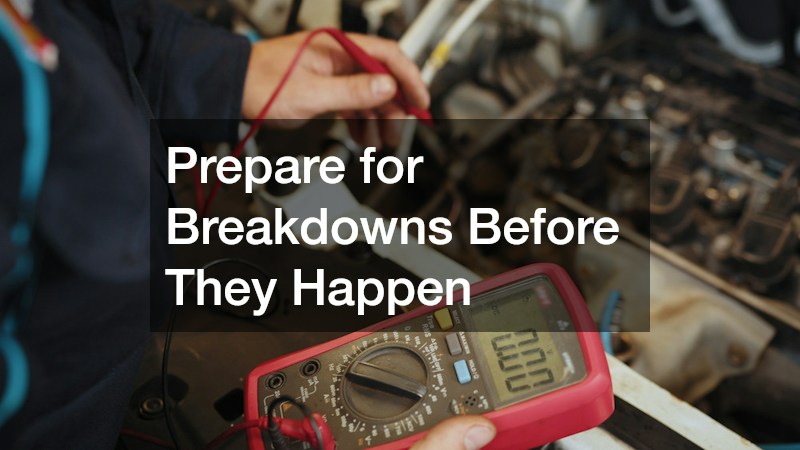
A breakdown is easier to manage when you already know what information to provide and where the vehicle should go. Waiting until you are stranded on the side of the road to make every decision adds unnecessary stress.
Store roadside-assistance information, insurance contacts, your preferred repair facility, and emergency numbers in your phone. It is also helpful to keep the vehicle identification number and basic vehicle details accessible.
Some problems mean the vehicle should not be driven farther. Examples include:
- Severe overheating
- Loss of oil pressure
- Major fluid leakage
- Serious steering problems
- Significant brake failure
- A badly damaged wheel or tire
- Smoke or an electrical burning odor
- Accident damage that interferes with safe operation
When calling a local towing company, provide the exact location, vehicle year and model, the condition of the vehicle, and the intended destination. Mention whether the vehicle rolls and steers and whether it is in a parking garage, narrow driveway, ditch, or another location that may require special equipment.
Ask about pricing before service begins when circumstances allow. Find out whether there is a hookup charge, mileage rate, storage fee, or additional cost for unusual recovery conditions.
Local towing services may also provide assistance beyond standard transport. Depending on the provider, that may include winching, jump-starts, lockout assistance, tire-related roadside help, or accident recovery.
Ask which towing method will be used, especially for vehicles with all-wheel drive, low ground clearance, modifications, or existing accident damage. The wrong method can potentially create additional problems.
Safety while waiting matters too. If possible, move away from active traffic and turn on hazard lights. On high-speed roads, remaining behind a barrier or in another protected area may be safer than standing beside the vehicle. Avoid positioning yourself between vehicles or attempting a roadside repair where passing traffic creates a risk.
Preparation takes only a few minutes, but it can make an unexpected breakdown much easier to manage.
Maintain RV Systems Before Travel Problems Develop
An RV combines vehicle systems with many of the features found in a home. In addition to tires, batteries, and exterior lighting, owners may need to maintain plumbing, electrical components, climate-control systems, appliances, slide-outs, and seals.
Before a major trip, test systems early enough that there is time to correct a problem. Check tire condition and pressure, batteries, roof seals, plumbing connections, water pump operation, air conditioning, refrigerator operation, exterior lights, and slide-outs.
Mobile rv repair companies can be particularly useful when the vehicle cannot be moved conveniently or when a problem happens at a campsite, storage facility, or residence. A technician coming to the RV may be practical for issues involving appliances, plumbing, charging systems, air conditioning, or slide-outs.
However, not every repair is well suited to mobile service. Local rv repairs performed at a dedicated facility may make more sense when the job requires a lift, extensive diagnostic equipment, structural work, drivetrain repairs, or prolonged access to specialized tools.
Before choosing between mobile and shop-based service, describe the problem in detail. Include any error messages, unusual sounds, whether the system works intermittently, and what happened immediately before the issue appeared.
It is also helpful to carry documentation for the RV and its major components. Keep digital or printed copies of:
- Appliance model numbers
- Vehicle identification information
- Warranty documents
- Service records
- Electrical diagrams when available
- Roadside-assistance information
- Contact information for previously used repair facilities
Preventive timing matters. Discovering a failed air conditioner or leaking plumbing connection the evening before a long trip can create unnecessary pressure. Testing major systems several weeks in advance provides time to order parts or schedule work.
Owners should also inspect the roof and exterior seals periodically, not just before travel. Water intrusion can cause extensive damage if it reaches walls, ceilings, insulation, or cabinetry. Addressing deteriorated seals early can help avoid much larger repairs later.
Know When Repairing a Vehicle Stops Making Financial Sense
A vehicle does not have to be completely unusable before replacing it becomes the more reasonable option. The key is evaluating the entire condition of the vehicle rather than looking at one repair bill in isolation.
After a major accident, estimates from local auto body shops can help clarify the cost of restoring the vehicle. If estimates differ significantly, compare the scope of work rather than simply choosing the lowest price. One estimate may include structural measurements, calibration, replacement hardware, or refinishing operations that another does not.
Mechanical condition matters as well. Consider what the vehicle may need over the next six to twelve months.
Add up likely expenses such as:
- Immediate repairs
- Tires
- Scheduled maintenance
- Suspension work
- Recurring mechanical problems
- Registration
- Insurance
- Known upcoming replacements
Then compare that number with the vehicle’s current value, reliability, and the cost of replacing it. A significant repair may make sense on a well-maintained vehicle with years of useful life remaining. The same repair may be harder to justify on a vehicle with severe rust, high mileage, and several additional problems.
For vehicles with little remaining value, companies that buy cars for cash may provide another option, including for damaged or non-running vehicles depending on the buyer’s policies.
Before agreeing to a sale, confirm the final offer, whether towing is included, what documents are required, when payment occurs, and who handles the title transfer. Ask whether any fees can be deducted after the vehicle is inspected.
Before the vehicle leaves, remove personal belongings and digital information. Delete stored navigation addresses, disconnect paired phones, remove toll tags, clear garage-door opener programming, and take out parking passes or other account-linked items.
Keep copies of the bill of sale, title transfer, and related documents. Cancel insurance only after ownership has formally transferred according to the requirements in your area.
The right decision is not always to repair, and it is not always to replace. Looking at the vehicle as a whole gives you a better basis for deciding where your money is best spent.
Understand the Purpose of Every Service

Drivers do not need to understand every mechanical or technical detail to make responsible decisions. The most important skill is recognizing what kind of help a situation requires and responding before a manageable problem becomes a larger one.
Safety-related symptoms should always come first. Mechanical changes should be investigated before they lead to a breakdown, accident damage should be evaluated beyond what is visible, and roadside planning should happen before an emergency. Specialty vehicles and equipment also benefit from proactive maintenance because their systems may require more specific knowledge or tools.
Keep a physical or digital vehicle file with maintenance records, invoices, warranty information, tire details, collision documentation, insurance information, and emergency contacts. Good records can save time when a new issue appears and provide useful context to the next technician.
As a vehicle ages, periodically reassess whether continued repairs still make financial sense. The goal is not to avoid spending money on maintenance. It is to spend appropriately on a vehicle that remains safe, useful, and dependable.
Planning ahead, asking informed questions, and knowing which professional to call can make vehicle ownership safer and far less stressful over the long term.